
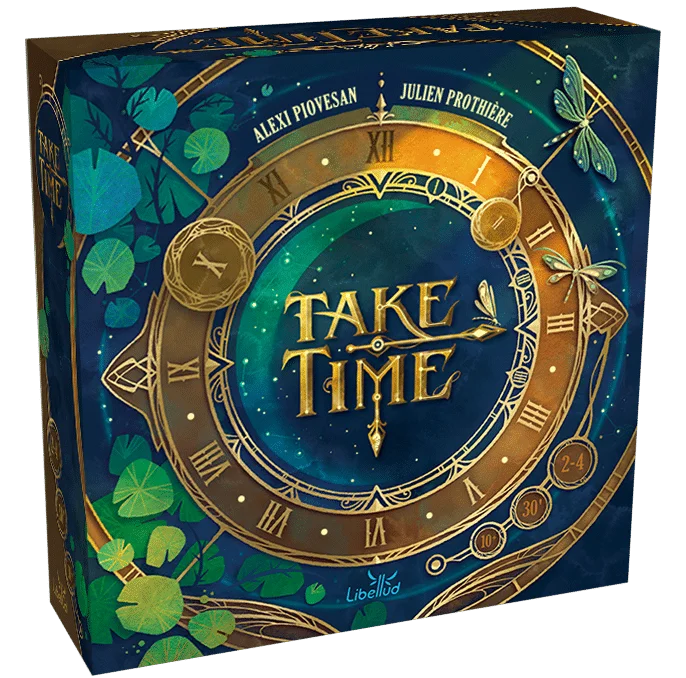

Take Time
Time itself is testing you!
2 - 4 players
10+
30 min
Genre(s)
Universe(s)
Release date
10/2025
Author(s)
Illustrator(s)
What is Take Time?
Take Time is more than a strategy game — it’s a collective odyssey. A game that invites players to slow down, reflect, communicate, understand one another, and build mutual trust. With every game session, new constraints and fresh thinking are required, and your choices must constantly adapt to move forward together.
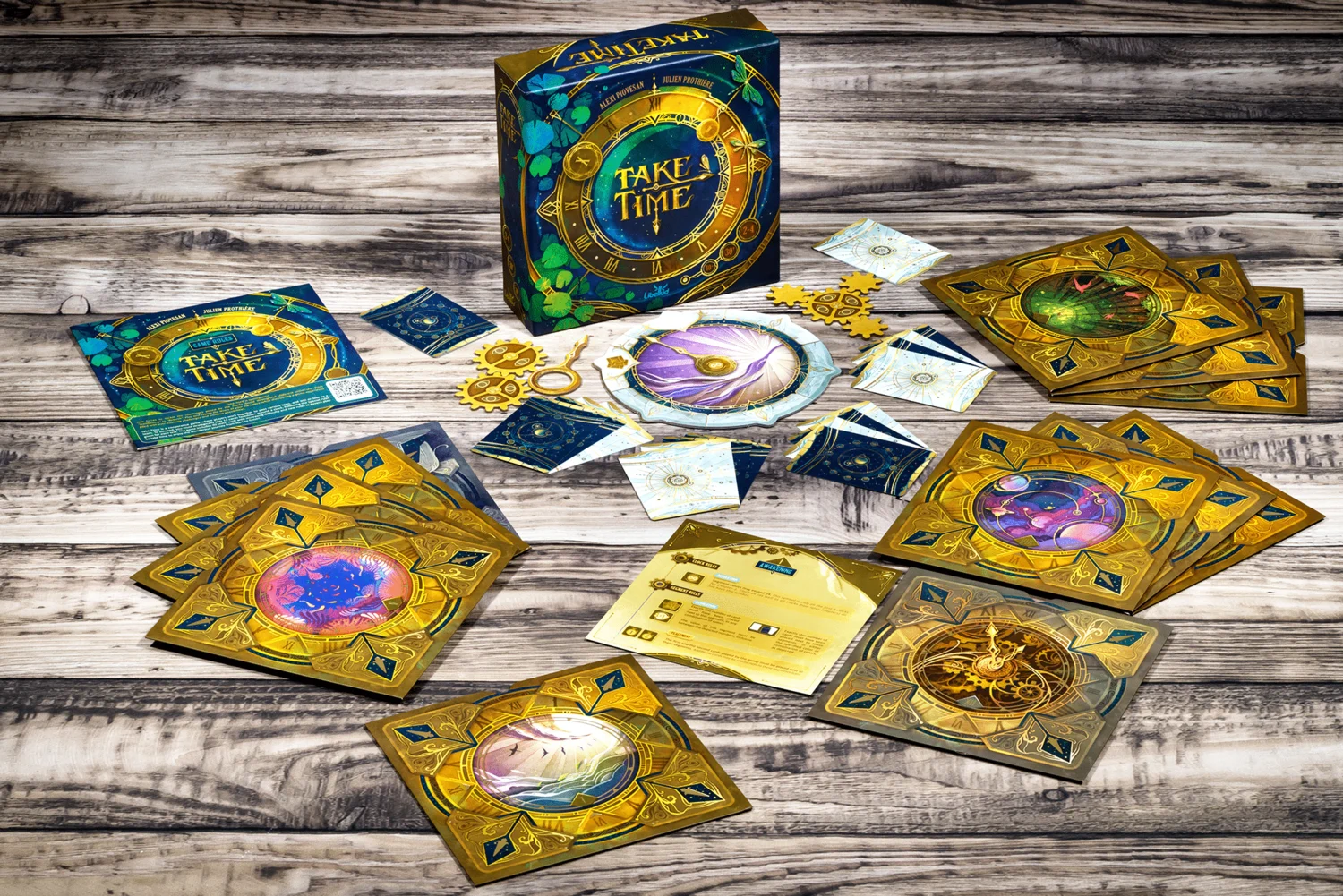
Contents:
- A rulebook
- 12 Solar cards & 12 Lunar cards
- 3 Reminder tokens
- 3 Bonus tokens
- 10 Chapter sleeves, each containing 4 Clocks
- 1 Clock Hand
- 1 Sleeve of Regrets
- 1 Rebirth sleeve containing 1 Rebirth clock,1 Second Hand and 6 tokens
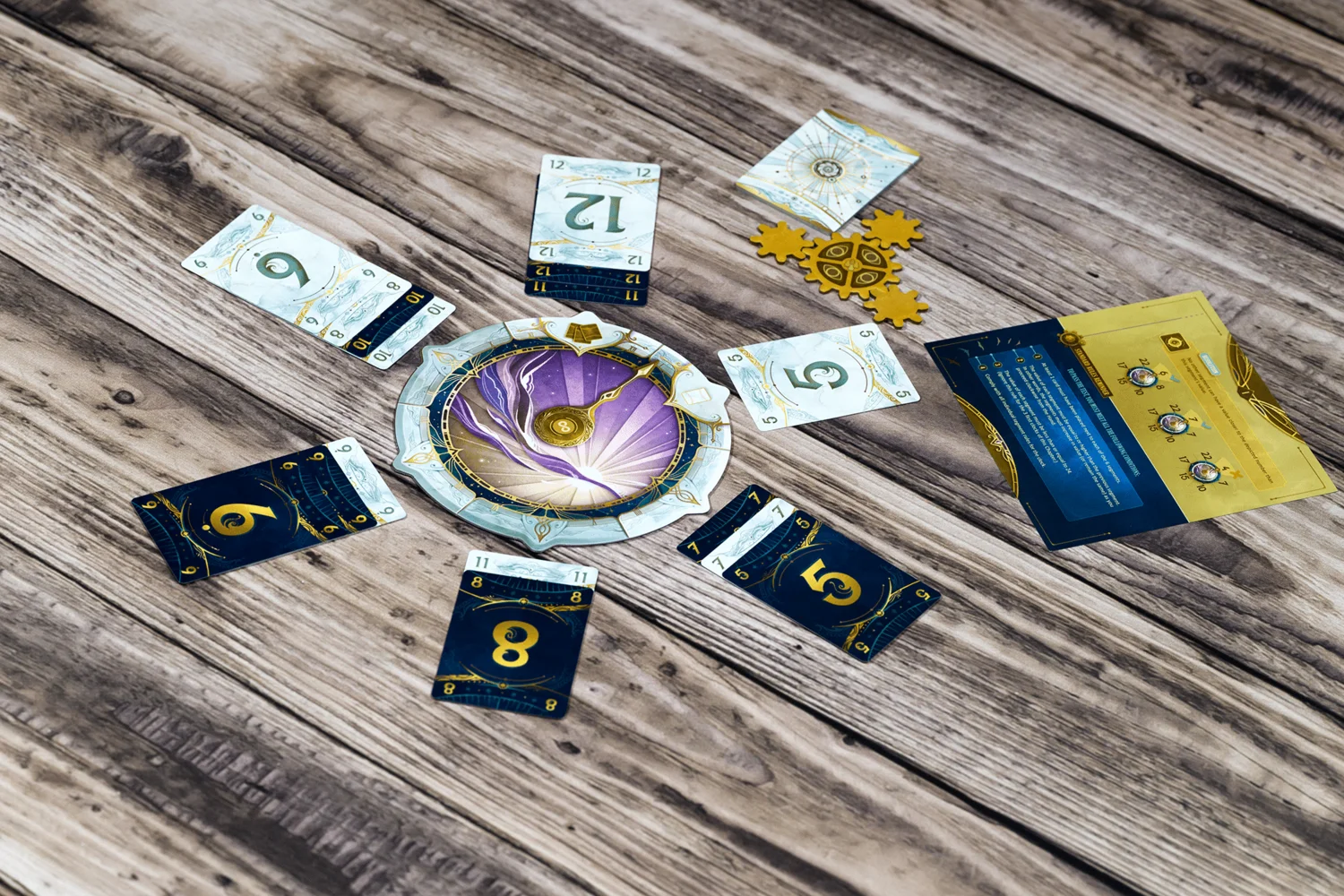
About Take Time
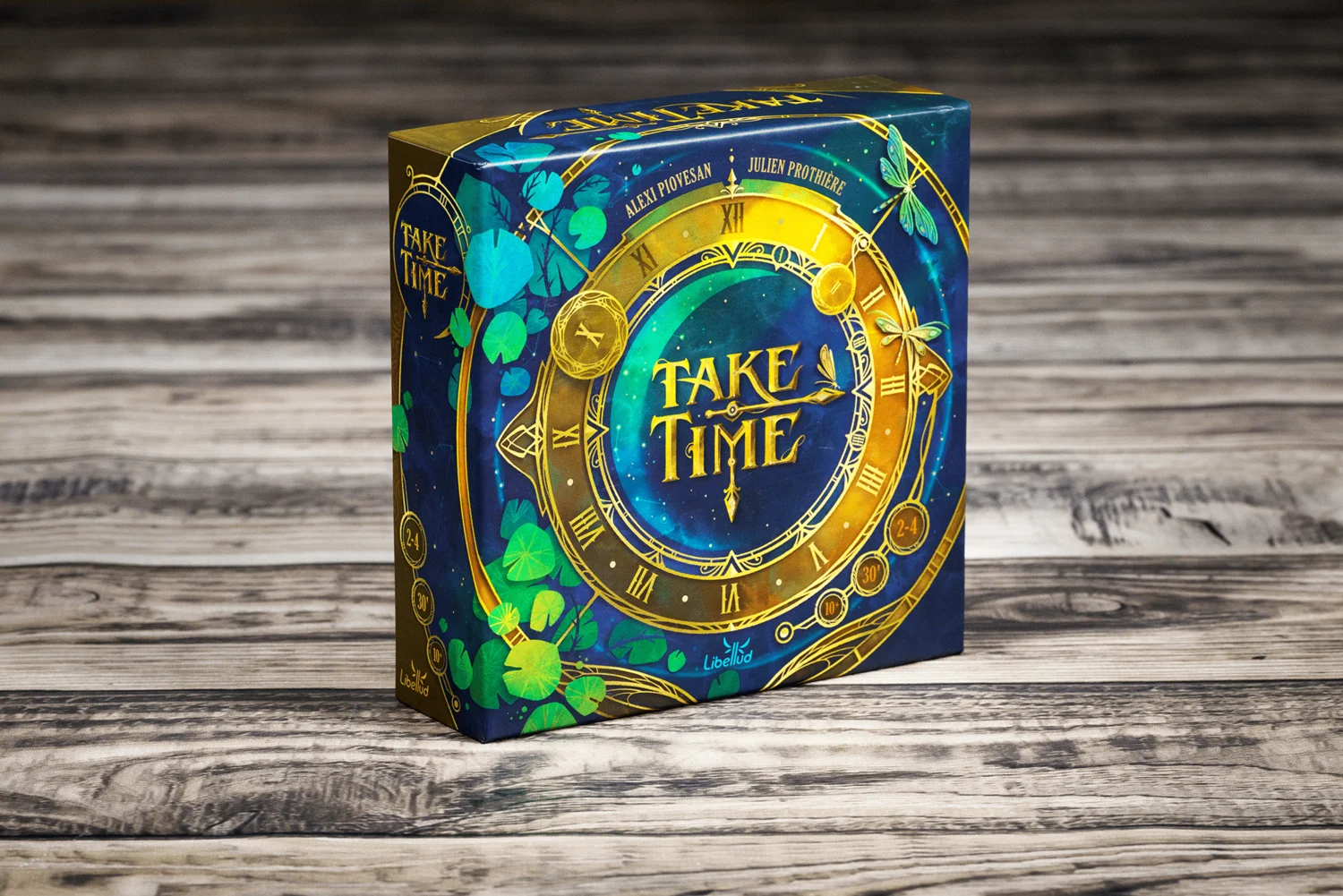
Take Time is a cooperative card game that immerses players in a one-of-a-kind adventure, where each challenge unfolds within a unique illustrated world. Players move forward as a team through a series of symbolic realms, each one linked to a key moment in a poetic journey — from “Awakening” to “Rebirth.”
Each clock offers a renewed experience. Beneath its apparent simplicity lies a unique challenge designed to test your ability to anticipate, listen, and think as a unified group. Take Time celebrates communication, shared observation, and team decision-making. It’s a game that values group cohesion, collaborative insight, and the beauty of succeeding together.
How to play Take Time?
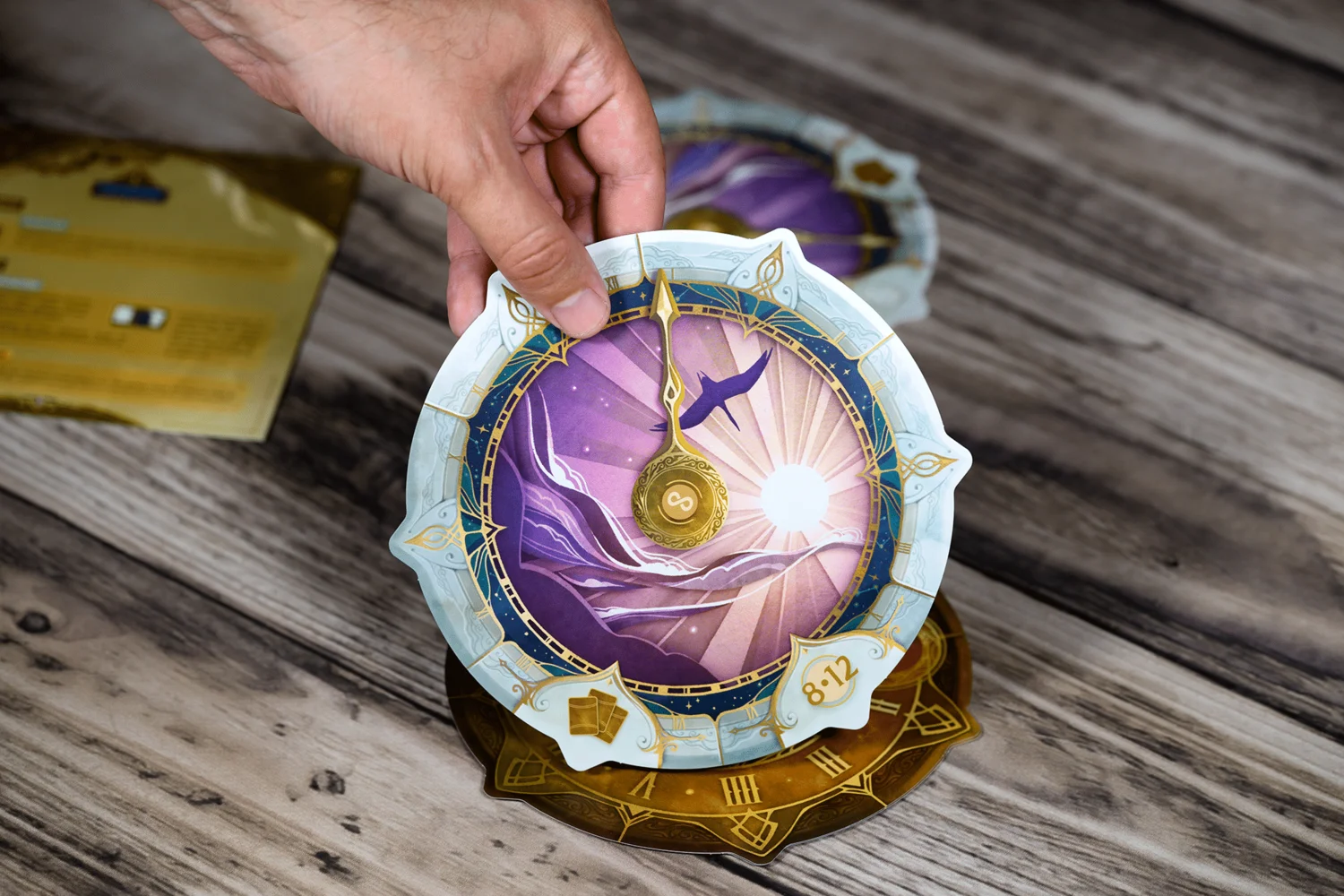
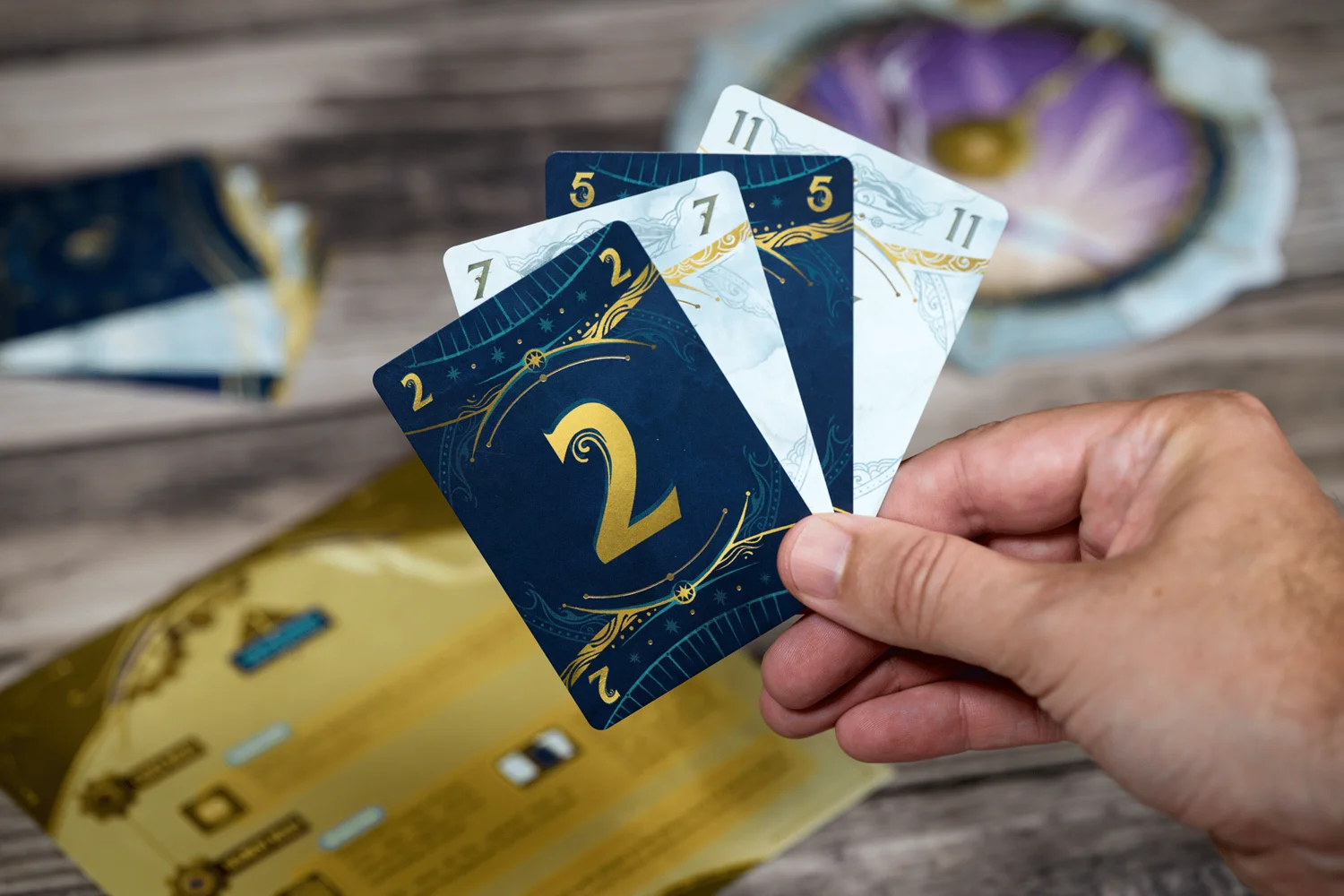
A cooperative game that’s accessible, immersive, and endlessly replayable
With evolving rules, Take Time offers a flexible gameplay experience that adapts to your pace. Explore the 40 challenges, revisit the ones you haven’t mastered yet, or replay your favorites to refine your approach.
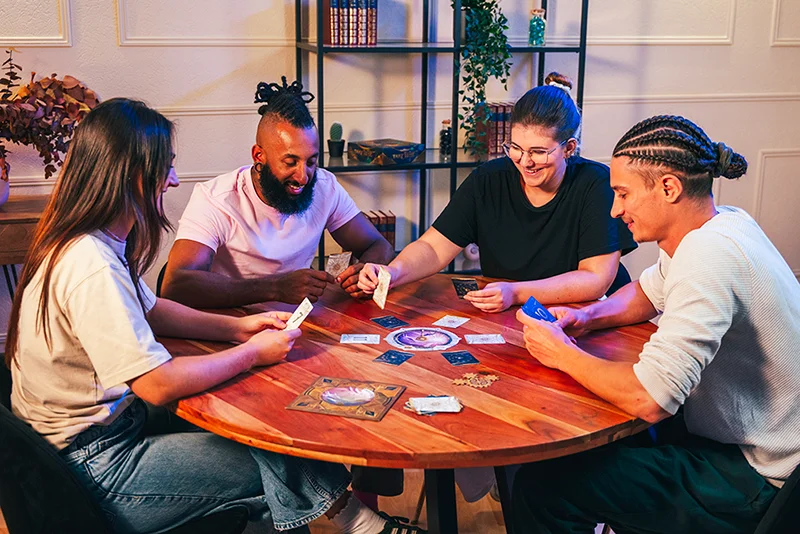

Replayability is at the heart of the game system. Each test allows for multiple strategies, and every team will find its own way to solve the puzzle. Whether you’re playing with family or fellow strategy lovers, Take Time guarantees sessions full of discovery, coordination… and occasionally, a failure that teaches you how to try again — differently.
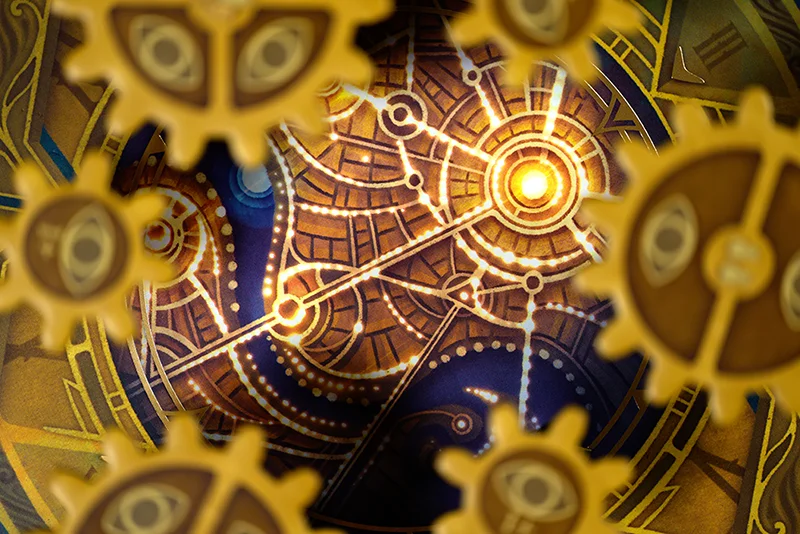
And beyond the mechanics, it is Maud Chalmel’s striking and evocative artwork that immerses each challenge in its own unique atmosphere. The clock is more than just a tool: it becomes the stage for a mission to accomplish, a gateway to a world that is as aesthetically captivating as it is strategic.


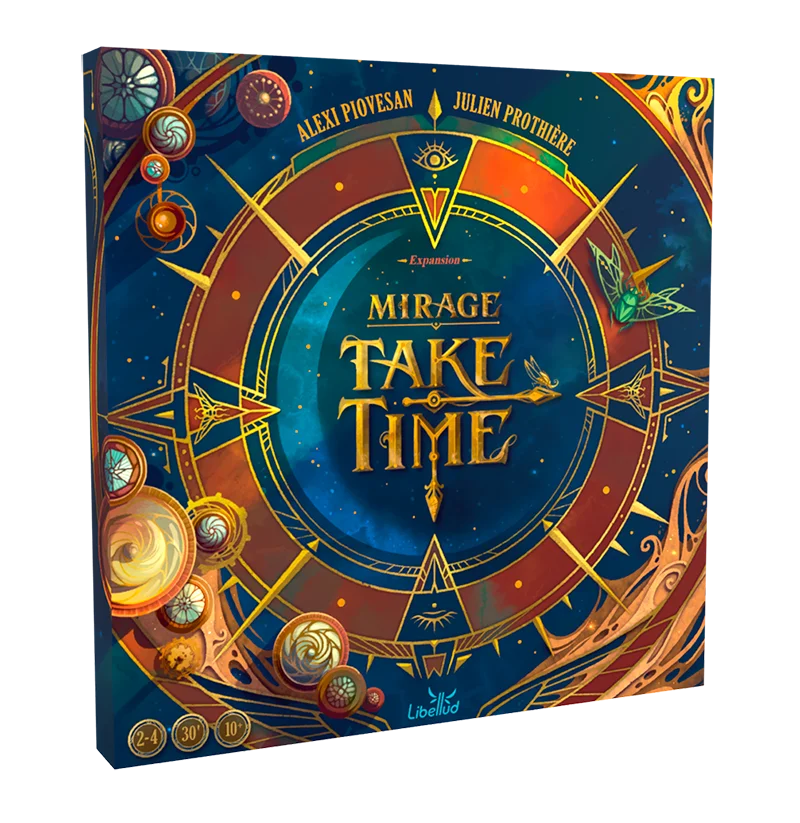
Mirage
Time is summoning a venerable ancient ally: the Sand Bird.
Mirage is an expansion for Take Time with 4 new cooperative tests. New elements also add endless replay to the base game!
Requires the Take Time base game to play
.
.
.
FAQ
Take Time
During setup, select the Reminder token that matches your player count, then place the 3 Bonus tokens, the small gears, face down around it. You do not need to move or flip the Reminder or Bonus tokens during the placement phase. Simply compare the number of face-up cards with the number of visible [eye] symbols on your tokens. At the end of a clock’s resolution phase, if you have failed, flip one Bonus token face up. This allows your group to play 1 additional face-up card on your next attempt at the current trial. If you fail a second time, flip the second Bonus token face up, and so on. Once you complete the trial, flip all Bonus tokens face down again.
“When specific colours are required, this occasionally happens: among the 12 cards, we only had one colour instead of two, even though the missing colour was needed.” If the cards dealt make the trial impossible to complete, you can spot this before playing, since the Solar or Lunar card backs are visible. In this case, you may deal the cards again before the discussion phase begins.
This restriction means that this segment must have the total closest to the indicated number. Ties are allowed. The icon showing a “6” means that the total closest to 6 must be in this segment. It does not need to be exactly 6. The total could be 5, 7, or even another value if no total of 5, 6 or 7 is possible, provided that no other segment has a total closer to 6. If the rule is still unclear, I recommend checking these Take Time forum threads on BGG, which provide further explanations of this specific point: https://boardgamegeek.com/thread/3618605/clock-14-no-other-segment-can-have-a-value-closer https://boardgamegeek.com/thread/3599393/rules-question-about-closer-value
During the discussion phase, you may indeed agree that whoever finds the highest-value card among those dealt in their hand must play it in front of the [+] segment. For example, if the highest value dealt is 11, an 11 must be placed in front of that segment. If two players each have an 11, only one of those cards needs to be placed in front of the [+] segment. The other may be played in front of another segment. Of course, the challenge is that once you have looked at your cards, you can no longer communicate with each other. You will therefore have to rely on the strategy you agreed on beforehand.
When the [-] restriction appears in front of two different segments, the two lowest-value cards dealt must be split between those two segments. Ties are allowed. For example, if the two lowest cards dealt are a Solar 1 and a Lunar 1, these two cards must be placed in front of the two [-] segments, one in front of each. The card with a value of 2 therefore did not need to be placed in front of either segment. The two lowest cards dealt were 1 and 1, rather than 1 and 2. If the two lowest cards had been 1 and 2, those would have been the cards you needed to split between the two segments.
Yes, absolutely! This can even be a very useful option.
Yes, the difference between the two values determines the ascending order. You can consider the clock’s rule and the segment rules separately. For this clock, two cards must be placed in front of each segment. What matters is the difference between those two cards. These differences must be in ascending order clockwise, starting from the hand you placed during the discussion phase. For the segment with the “12” symbol, the sum of the two cards must be the closest to 12. It does not need to be exactly 12. It may be lower, provided that it is the closest total to 12 across all segments. The difference between the two cards in this segment must also be equal to or greater than the difference in the previous segment.
To plan your strategy, work through the restrictions step by step. First, remember that you do not need to reach exactly 24. The “24” segment simply needs to have the two-card total closest to 24 across all segments. Ties are allowed. Next, try to identify your highest Lunar card as soon as possible. For example, if the Lunar 12 has been dealt, you already know it must be placed in front of the corresponding segment, so it cannot be used for the “24” segment. For the hand’s starting position, the designer recommends starting at the segment requiring the lowest Solar card. This will give you more flexibility when managing that restriction and the “24” segment. Also remember this clock’s special rule: you must place exactly 2 cards in front of each segment, and the differences between their values must be in ascending order clockwise, starting from the hand. You can adjust these differences to meet several restrictions. For example, placing 12 and 4 in front of the segment requiring the highest Lunar card gives a difference of 8 and a total of 16. By comparison, 12 and 10 give a difference of only 2, but a total of 22, which is more likely to compete with your “24” segment. Your planning could therefore follow this sequence: where to place the lowest Solar card, where to place the highest Lunar card, which differences to aim for, and which cards to keep so that the “24” segment has the total closest to 24. Remember that the hand’s position can still change. Its starting position is part of your strategy, but it does not necessarily lock you into that position for the whole game. There is no single winning combination. It all depends on the cards dealt, which is precisely what makes this clock challenging.
Whenever you play a card in front of this segment, you must draw a card from the deck of cards that were not dealt during setup.
For all 4 clocks in this world, you must apply two resolution rules. 1. The usual rule This is the rule you always apply, as explained on page 8 of the rulebook. 2. The rule for the new hand Starting from the segment indicated by this hand and moving clockwise, the value of the first card played in front of each segment must be equal to or greater than the value of the first card played in front of the previous segment. When revealing the cards, make sure you keep them in the order in which they were played. During resolution, first check that the card values in each segment follow the usual rule. Then, starting from the segment indicated by the new hand and moving clockwise, check that the value of the first card in each segment is equal to or greater than the value of the first card in the previous segment. For Clocks II and III, you must also apply the special rules for certain segments. Finally, the fourth clock has an additional rule during the placement phase: You may not play cards in front of the segments indicated by the second hand. After each player’s turn, rotate this hand clockwise so that it points to two other segments.
Possibly! Remember that you can move the hand during the resolution phase. Reread the Chapter 3 leaflet if needed. This option is rarely used in the early chapters, but it can make all the difference in the later chapters.
The “Rebirth Clock” is indeed the clock-shaped punchboard containing the 6 Rebirth tokens, shown in your first image. To play with the Rebirth content, simply choose one of the 40 clocks in the box, then select one Rebirth token and place it next to your chosen clock. Play that clock with the special rule shown on the token.
.

Discover all the
Awards
2026 Spiel des Jahres Recommended
Recommended
2026 As d’Or Nominé
Jeu de l’Année Initié Nominé
2026 Nederlandse Spellenprijs Nominee
Best Family Game Nominee
2026 Swiss Gamers Award
Main Category (Gold)
2026 Trophée Flip
Catégorie Réflexion
2026 Spiel der Spiele
gewinnt
2026 Dice Tower
Seal of Excellence
2025 Board Game Award
Catégorie Meilleure Direction Artistique
2025 Golden Geek Best Nominee
Best Cooperative Game Nominee
2025 Golden Geek Best Nominee
Light Game of the Year Nominee
2025 Golden Geek Best Nominee
Best Party Game Nominee
.
.
.
What Makes Take Time Unique?
- The cooperative experience, where communication is the key to success.
- The smooth learning curve – easy to explain, yet increasingly engaging.
- A game that never runs out of steam, with 40 challenges and additional modules.
- The artwork by Maud Chalmel, which beautifully enhances the overall experience.
Who Is Take Time For?
- Families: with children above 10 will appreciate the stunning illustrations within a time theme, the balance of easy to learn and offering challenges that grow in intensity and variety as your adventure unfolds.
- Fans of cooperation: original cooperative experience, combining strategic discussion and silent execution.

.
.
.
Download
Rulebooks
Rulebook
English
Livret de règles
Français
reglamento
Español
Spielregel
Deutsch
regolamento
Italiano
規則手冊
中國人
pravidla hry
Čeština
Κανόνες παιχνιδιού
Ελληνικά
Pravila igre
Magyar
instrukcja
Polski
Livro de regras
Português (Brasil)
Regulament
Română
Pravidlá hry
Slovenčina
Правила гри
Українська
遊戲規則
繁體中文
Pravila igre
Hrvatski
— ルールブック
日本語
Spelregels
Nederlands
Pravila igre
Slovenščina
Правила игре
Српски
กติกาการเล่น
ไทย
.